
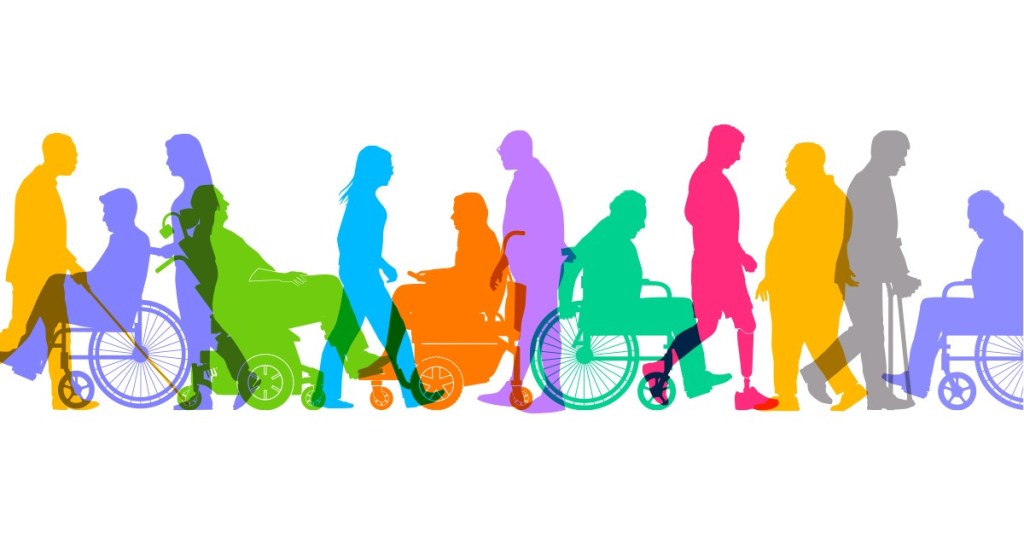
COVID-19 has undeniably changed our workspaces and how we approach the LGBTIQ+ movement for good. We can now give disabled queer activists a space at the table. However, this shift from virtual to online spaces has brought about a unique set of challenges that most LGBTIQ+ spaces have never thought about before. To understand those challenges, we need to look at and dismantle our privileges. In this article, we will challenge what our current movements look like and how the still ongoing pandemic has taught us a very important lesson about ableism.
Disability activists have been using online platforms as a means of their advocacy for years. The overwhelming supply of in-person rallies and physical spaces, many of them not being accessible or accommodating to the needs of disabled activists, meant that many disabled people couldn’t show up to these spaces. As the world moved online with the pandemic, there was hope that disabled people will finally be included in these spaces. However, the attempt to include the disabled community was majoritively performative. Many online spaces (think Zoom workshops and Zoom calls) didn’t meet basic accessibility needs such as closed captions, which can be provided with a click of a button. This shows that the disabled community has often been forgotten about and is still being forgotten about. This also comes in the lack of sign language interpretation at online events, or even providing enough breaks to workshop participants and acknowledging that the LGBTIQ+ community is more likely to be disabled and neurodivergent.
In the 2015 U.S. Transgender Survey, it was proven that transgender people were more likely to be disabled than the general population with 39% of the 26,000 participants reporting having a disability. This is also true with LGB adults as 1 in 4 adults reported having a disability. It is currently estimated that about 25% (the reported diagnosed number is 15%) of the world population (whether LGBTIQ+ or not) are currently disabled. This number includes visible, invisible, and dynamic disabilities. This also includes self-diagnosis. It is imperative to understand that many LGBTIQ+ people, especially transgender populations, are kept in a state of poverty and might not have access to healthcare or be able to get a diagnosis. Even with access to healthcare, many are dismissed based on their SOGIESC status. This is especially true for transgender people, as they face discrimination in healthcare. It is also shown in the way that transgender people, non-binary people, and cis women are more likely to be dismissed and have their disability blamed on other things like weight, hormone replacement therapy, activity, and even identity. It is vital to additionally acknowledge that BIPOCs are more likely to have trouble when seeking a diagnosis and healthcare services.
Now that the world is going towards a “new normal”, we continue to see what ableism looks like in physical spaces. Many countries have now removed their mask mandates and announced that masks are going to be optional and advised vulnerable groups and those infected to still use them. A lot of the narratives around mask use, from the beginning of the pandemic, revolved heavily around able bodies and that because they were healthy they didn’t need to take the precautions. We, now, understand that Covid-19 was a mass disabling and very fatal pandemic. Not only in the lives we lost to the pandemic, but also in the mental health consequences, long Covid and the loved ones taken from us in a matter of weeks. The first populations that were treated as ‘collateral damage’ were disabled people, chronically ill people, and the elderly. Even to this day, many believe that the three groups should continue isolating themselves as others (able-bodied and young people) resume to live their lives as before the pandemic. But disability rights advocates are speaking out.
In the recent few months, I’ve seen an increase in people being against mask use which makes me feel unprotected and incredibly vulnerable. I was diagnosed with cutaneous vasculitis in early 2019. Since then, I’ve been unable to get regular flu shots and my condition has worsened leading to mobility issues and a suppressed immune system. For the past two and a half years, I’ve taken as many preventative measures as possible such as double masking, getting vaccinated (after multiple conversations with my healthcare provider), isolating myself, avoiding crowded spaces, only interacting with people when necessary, and requiring others to get tested before they enter my apartment or before meeting up with each other. Even with all those precautions, and the debilitating anxiety and worry about being infected because I acknowledge that being infected will (not might) land me in the emergency room, I’ve had a high risk of contracting it. Able-bodied people questioned my boundaries and overstepped them. As one person called me a coward for being scared of the “flu” and another told me I was overreacting. I still stuck to my boundaries and stayed isolated. Able-bodied folks went back to holding large maskless in-person events which led to the many waves during the pandemic.
Most recently, I was reading an article about isolation during covid-19 written by an able-bodied author, from an ableist perspective. The article mentioned that the author knowingly did not take precautions and shared saliva with someone else who tested positive. This is an example of the attitudes among able-bodied populations. Another example is a Twitter user stating that ‘healthy’ people didn’t need to wear masks as it was uncomfortable and that vulnerable populations need to protect themselves. These examples are far too common, and especially hit a little close to home.
Physical spaces (new and old) are still very inaccessible. Many events taking place are still in places with stairs only, with no sign language interpreters, standing events, not making it easy to lip read, inaccessible bathrooms, no content and trigger warnings or flash warnings, and even as far as no accessible entrances. Not only are these accommodations not provided, but events are also financially and geographically inaccessible. Many conferences taking place in the global north create barriers for low-income, disabled, and BIPOCs to join (due to visa issues, deportation on arrival, rigorous questioning, etc). With the end of Pride Month, and coming into Disability Pride month, it is necessary to discuss how inaccessible Pride is too and how we can dismantle ableism in our movement. We wouldn’t be celebrating pride if Marsha P. Johnson, a disabled Black trans trailblazer, didn’t fight for our right to march on the streets.
Our healthcare systems, all around the world, are still under incredible pressure which leads to its own sets of issues. Throughout the pandemic, many disabled and chronically ill people were denied healthcare because our hospitals were too overwhelmed. This has led to deteriorating conditions, death, and in some cases suicide. This lack of priority for marginalized populations during an emergency shows how easily disabled people are overlooked. We also saw this during conflict and war. Many disabled and chronically ill Ukrainians were stranded (and still are) because escaping meant walking long distances which wasn’t an option for many.
With that being said, there is a rising need to ensure that disabled and chronically ill people have a space in the fight for queer liberation. It is also essential that any conversation we have about the disabled community includes disabled people. “Nothing about us, without us” which was a phrase popularized by disabled South African activists rings true. While this phrase is being stolen by other movements, there is little to no acknowledgment of the birth of that phrase, which we’ve seen happen with AAVE (African-American Vernacular English). Going ahead, there is hope that disabled people will finally be treated with equity, however, there is high concern that we might not see it in our lifetime.
 Shane Bhatla